Systems Thinking
Interaction Design
Live Product

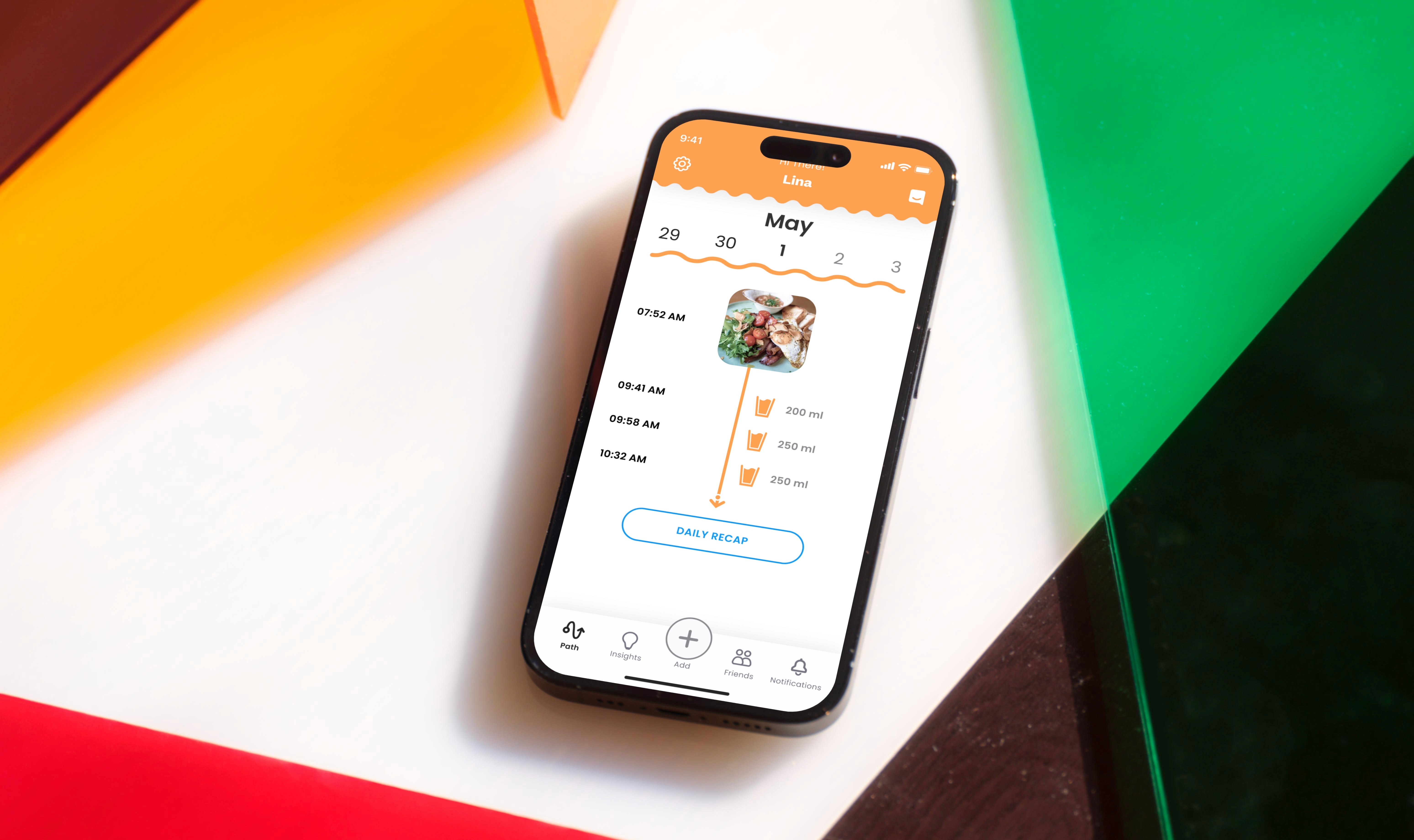
14,600 clicks a year just to track water
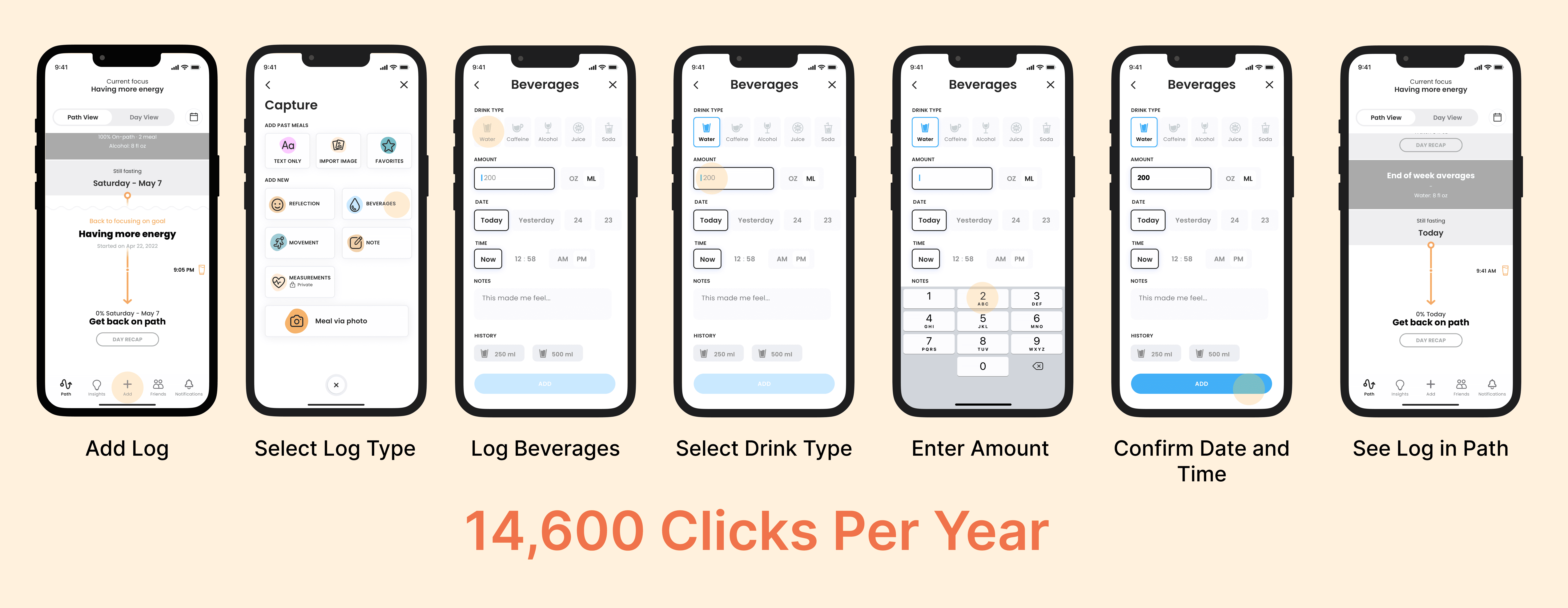
Logging 8 glasses of water, the most basic daily habit, took 40+ clicks and nearly 3 minutes in Ate's existing app. Users weren't forgetting to log their water intake. The process was slow enough that they'd delay, lose the details, and gradually stop.
Two things were broken at once: the logging flow was too slow, and there was no habit infrastructure to keep users coming back after the first week. With 6 weeks and 3 designers, I prioritized logging friction first, because if logging was too painful, no retention feature would matter.



A systems problem disguised as a labeling problem
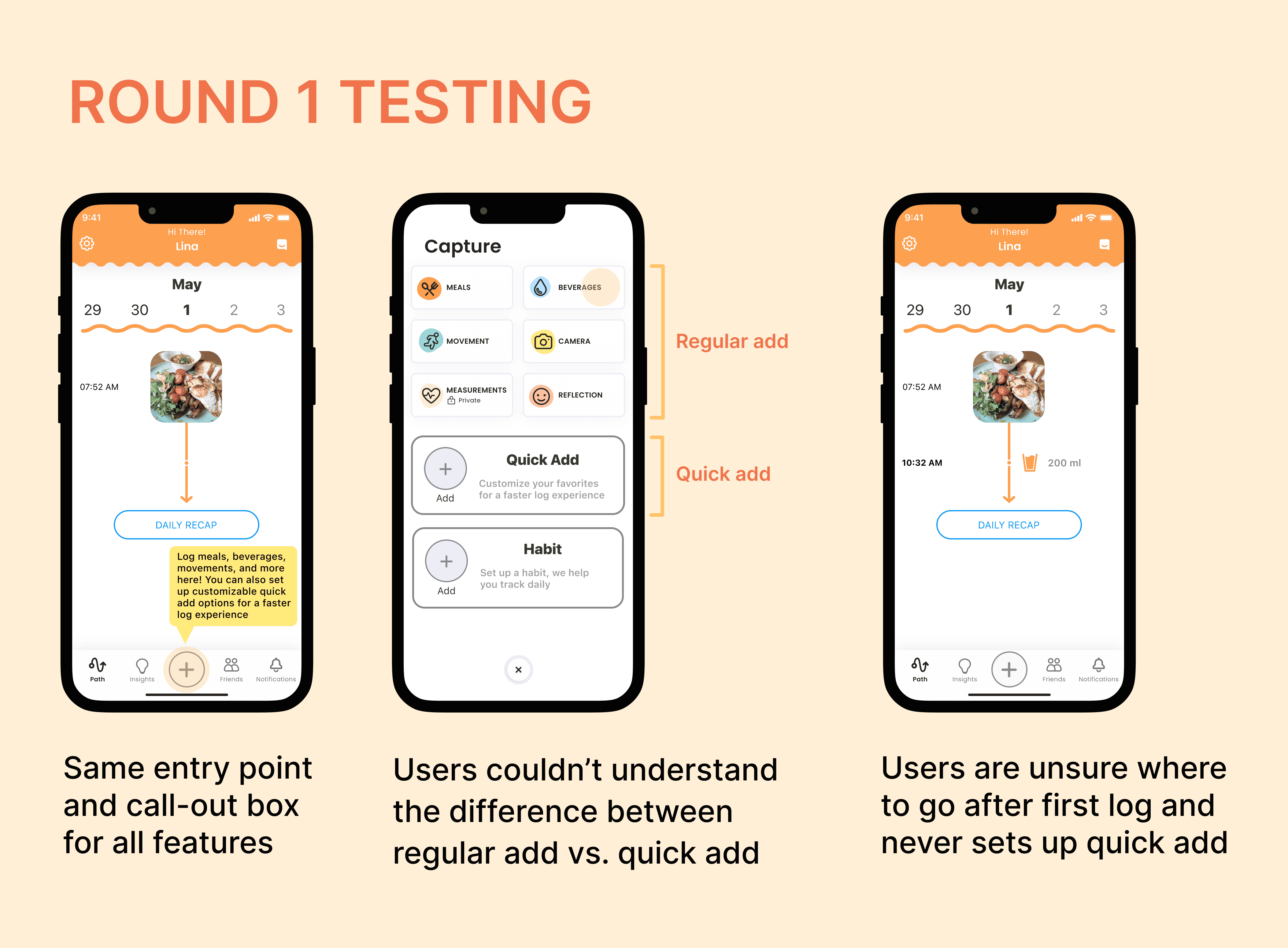
Round 1 testing with 5 users across three flows: regular add, quick-add, and habit tracking. Users couldn't tell the difference between quick-add and regular add. The instinct was to fix the labels, but that would have been wrong.
Both flows started from the same home screen with no explanation of the difference. Users had to already understand what quick-add meant before they could choose it. This reveals an architecture problem that we set out to fix for Round 2 Testing.
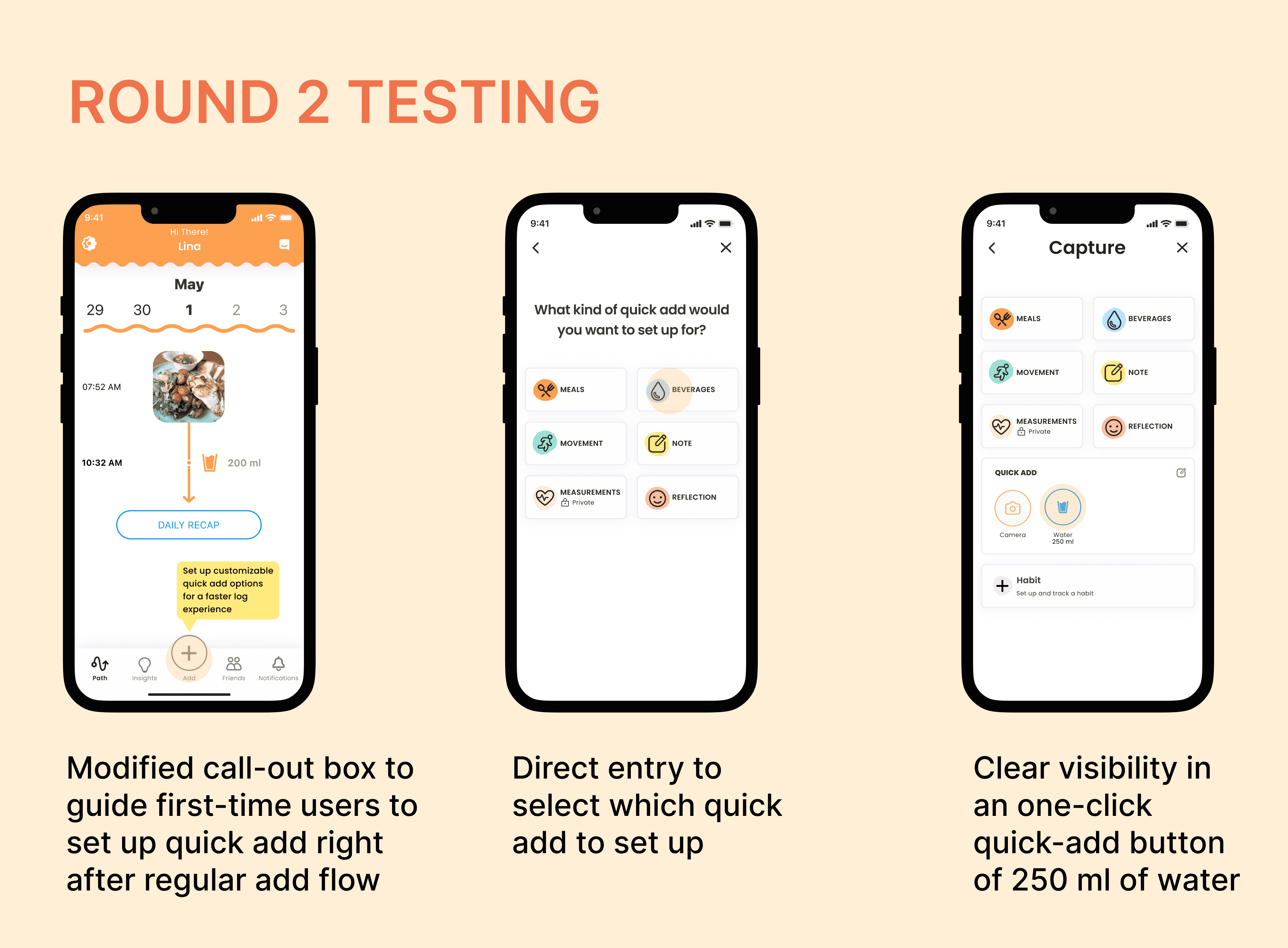
Round 2 fix: contextual dialogues appear the first time users tap into each flow, explaining the distinction at the moment they need it. Navigation confusion eliminated. Remaining feedback was surface-level and resolved before handoff.
One button, one tap, one system
Logging: 5 steps → 1 tap. After a one-time quick-add setup, logging water is a single tap from the home screen. The same central button handles regular logging, quick-add, and habit setup with no separate navigation or separate system to learn.
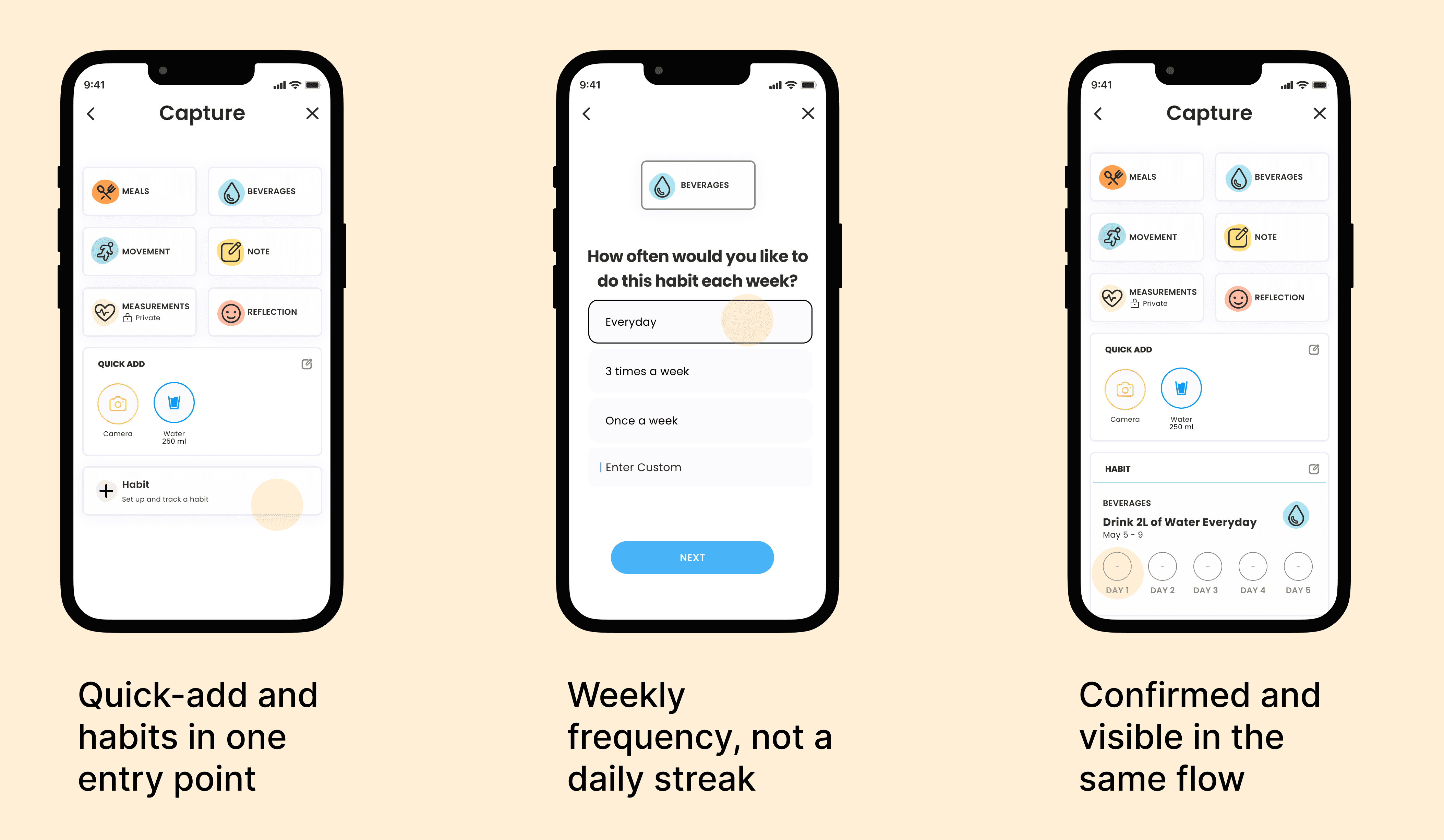
Habits: built into the same flow. For habits, users pick a category, name the habit, set a frequency, and choose a trial period rather than committing to a permanent daily streak. The trial period framing of 3 days, 5 days, 7 days fits Ate's "curious, not critical" philosophy.
Both quick-add and habits live in the same Capture screen. Returning users see their existing setups right there. Whereas, first-time users see the option to create one all in the same place, starting from the same "Add" button in the Home Screen.

Adopted into production 12 months later
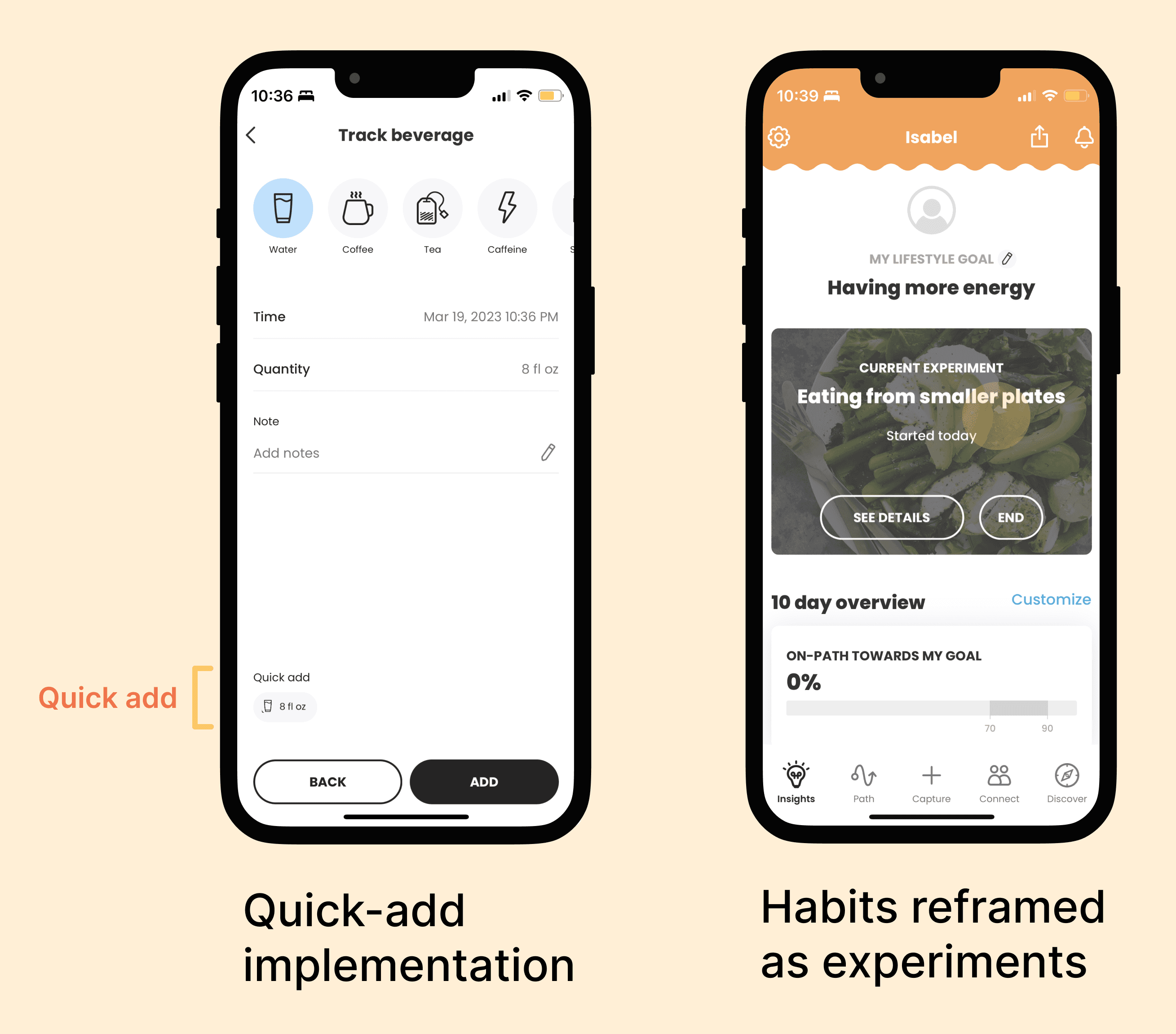
Both the quick-add system and the "experiment" framing were adopted into Ate's 2023 production app, past handoff, past engineering review, past a full product cycle.
The core interaction reached 800+ new users on Taberu's 2023 production app within 6 months of launch.
Metric | Before | After |
Clicks per log | 5 | 1 |
Time per entry | ~20s | ~12s |
8 glasses/day | ~3 min | ~90 sec |
What ultimately shipped was a system that built retention directly into everyday logging actions.
The highest-leverage move is rarely adding something new
What I'd refine. The habit setup flow could be reduced to a single scrollable screen, merging the intention prompt and frequency setting without losing the emotional beat between them.
What I'd build next. An insights layer: automatic pattern detection from logging history, lightweight progress moments, and reflection loops connected to the emotional data Taberu already captures.
What this made concrete. The most important insight I gained was that the highest-leverage move in a complex system is rarely a new feature. It's finding where the existing system charges users the most, and removing that cost.